


If you prescribe controlled medicines in Brazil, 2026 flooded your routine with acronyms: SNCR, RDC 1.000/2025, RDC 1.028/2026, blue form, yellow form, MAPA number, gov.br signature, ICP-Brasil. And one date circulates in every veterinarians' group: 30 September 2026.
This guide explains each term in plain language, separates what changes from what does not, and shows how to issue a legally valid electronic prescription today — without waiting for anyone.
Informational content, updated on 11 September 2026. The rules are in transition: always confirm the current text with ANVISA, MAPA and your CRMV.
First, the date: what 30 September 2026 means
ANVISA RDC 1.000/2025, in force since 13 February 2026, allowed prescription notifications, special-control prescriptions and retained prescriptions to be issued electronically. Two conditions: a qualified electronic signature (ICP-Brasil certificate) and numbering supplied by the SNCR, the National Prescription Control System.
ANVISA was due to release the SNCR electronic functions by 1 June. RDC 1.028/2026, published on 1 June, extended only that deadline to 30 September 2026. Nothing else in RDC 1.000 changed.
What this means for you:
- It is not a migration deadline. It is the date by which ANVISA must make the system available. No veterinarian is required to drop paper on 30 September.
- Pads remain valid. Blue, yellow and printed special-control forms are still valid. What changed is the printed model, mandatory since 18 May 2026.
- Simple prescriptions never depended on this. They can already be electronic today.
SNCR: the system behind the numbering
The SNCR generates the single, nationwide numbering for controlled prescription forms. Health surveillance agencies have used it since 2024 to distribute pads. Once the electronic functions are released, integrated prescribing platforms request numbering blocks on behalf of the prescriber, who authenticates with their gov.br account, and pharmacies record the dispensation in the system — which prevents an electronic prescription from being reused.
Note gov.br's role here: it authenticates the veterinarian with the SNCR. It does not sign the prescription.
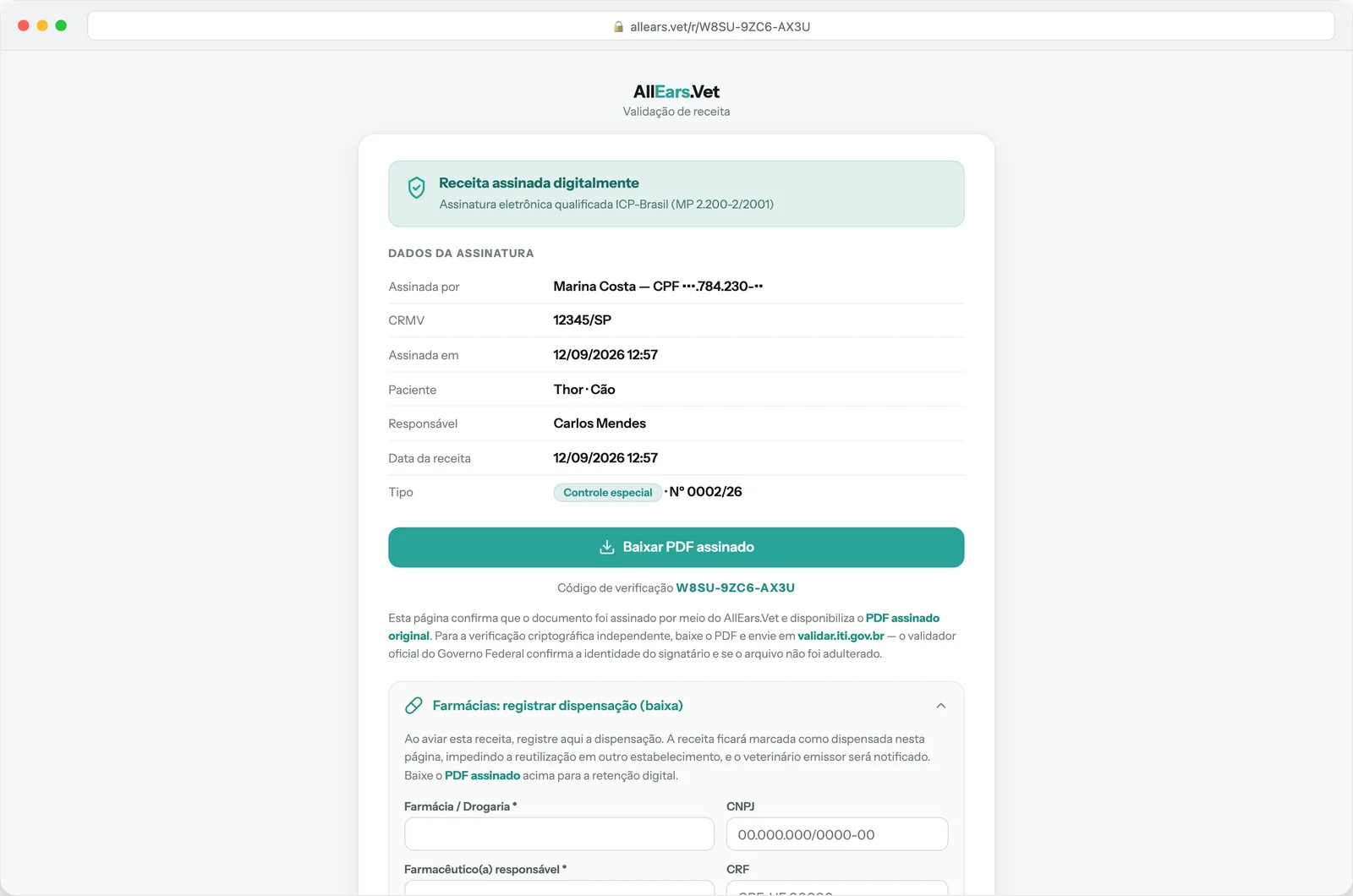
The dispensation recorded by the pharmacy on the same page as the QR is what stops an electronic prescription from being used twice.
Blue, yellow and white: which form is which
Ordinance SVS/MS 344/1998 organizes controlled substances into lists, and each list calls for a form:
| Form | Colour | Lists | Veterinary examples | Issuance |
|---|---|---|---|---|
| Prescription Notification B | Blue | B1 and B2 (psychotropics) | Phenobarbital, diazepam, midazolam | Numbered pad from the health surveillance authority |
| Prescription Notification A | Yellow | A1 and A2 (narcotics) | Morphine, methadone, fentanyl | Numbered pad from the health surveillance authority |
| Special Control Prescription | White, 2 copies | C1 and C5 | Gabapentin, fluoxetine, trazodone | Own form; 1st copy retained by the pharmacy; 30 days |
| Controlled compounded prescription | White, 3 copies | Controlled compounded formulas | Compounded products with a controlled substance | Own form numbered with the MAPA number |
Blue and yellow pads are still physical. It was precisely for them that RDC 1.000 opened the electronic path — which is only complete once the SNCR is in production. AllEars.Vet is already integrated with the SNCR for that moment.
MAPA number: what the controlled compounded prescription requires
MAPA Ordinance 837/2025, in force since 2 January 2026, requires individual, per-veterinarian sequential numbering on controlled compounded prescriptions, in the format MAPA number / sequence / year. The MAPA number is your veterinarian registration in SIPEAGRO, the Ministry of Agriculture's system. Without it there is no valid numbering for a controlled compounded prescription.
gov.br vs ICP-Brasil: the difference that decides everything
Two levels of electronic signature matter here:
- Advanced (gov.br): free, identifies the signer, but does not use an ICP-Brasil certificate. CFMV Resolution 1.465/2022 accepts this level only for prescriptions of medicines without special control.
- Qualified (ICP-Brasil): made with a digital certificate issued within ICP-Brasil (MP 2.200-2/2001). It has the same validity as a handwritten signature and is the only one accepted for special control, prescription notifications and controlled compounded prescriptions — by both the CFMV and RDC 1.000.
For the veterinarian the math is simple: an ICP-Brasil certificate covers everything from a simple to a controlled prescription. The practical format is the A1 e-CPF, a .pfx/.p12 file issued by a Certificate Authority accredited by ITI — such as Certisign, Serasa Experian or Soluti — with identity validation by video.
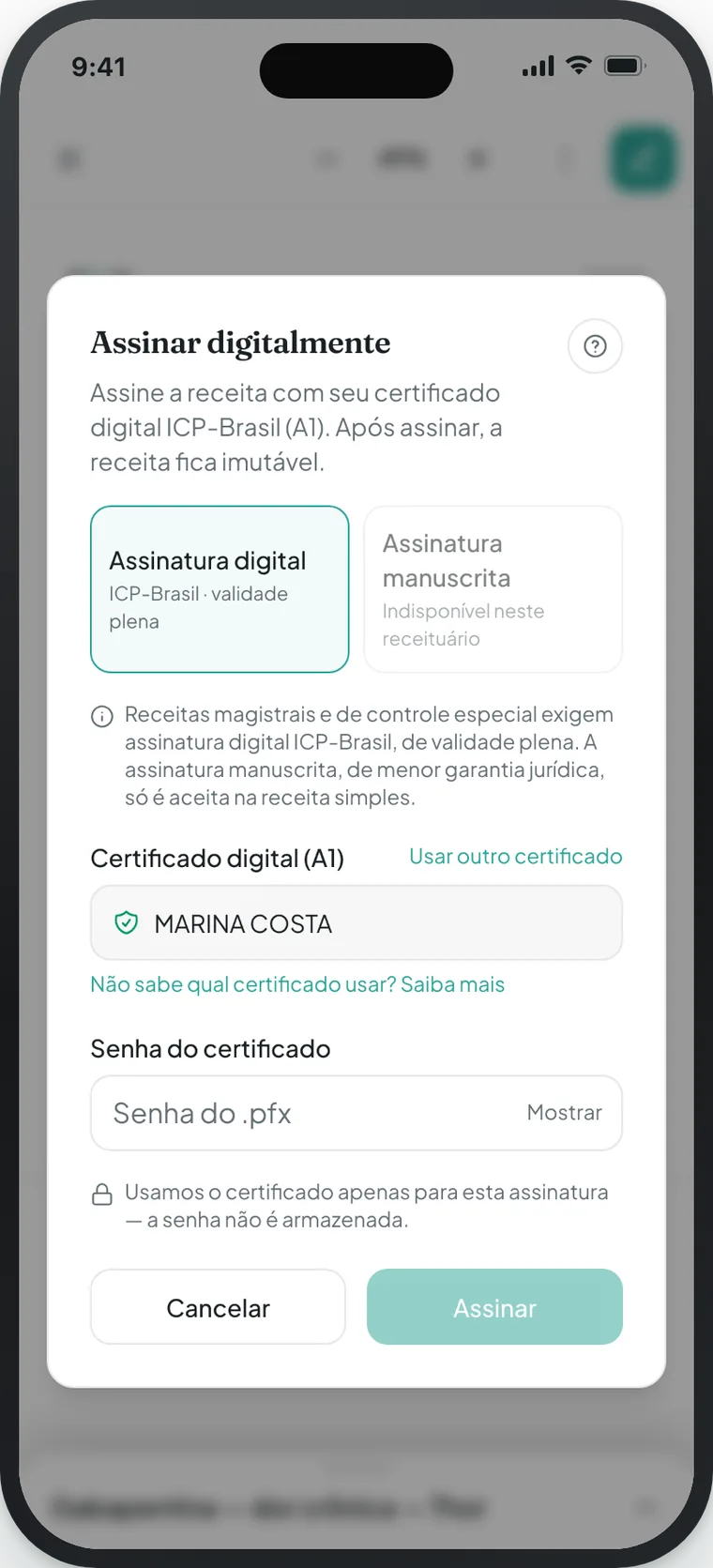
In the app, the method each prescription type accepts is explicit: on a special-control prescription, the handwritten signature is disabled. We explain the certificate types in detail in Digital signatures for veterinary prescriptions: types, certificates and how to set it up.
What you can do today — and what still depends on ANVISA
Already works in AllEars.Vet: simple, controlled compounded (3 copies) and special-control (2 copies) prescriptions signed with an ICP-Brasil A1 certificate; automatic sequential numbering per type; QR code and verification code on a public page; WhatsApp and e-mail delivery without printing; pharmacy dispensation record; annulment and new versions when something must change. For simple prescriptions, vets without a certificate can use the scanned handwritten signature on any plan.
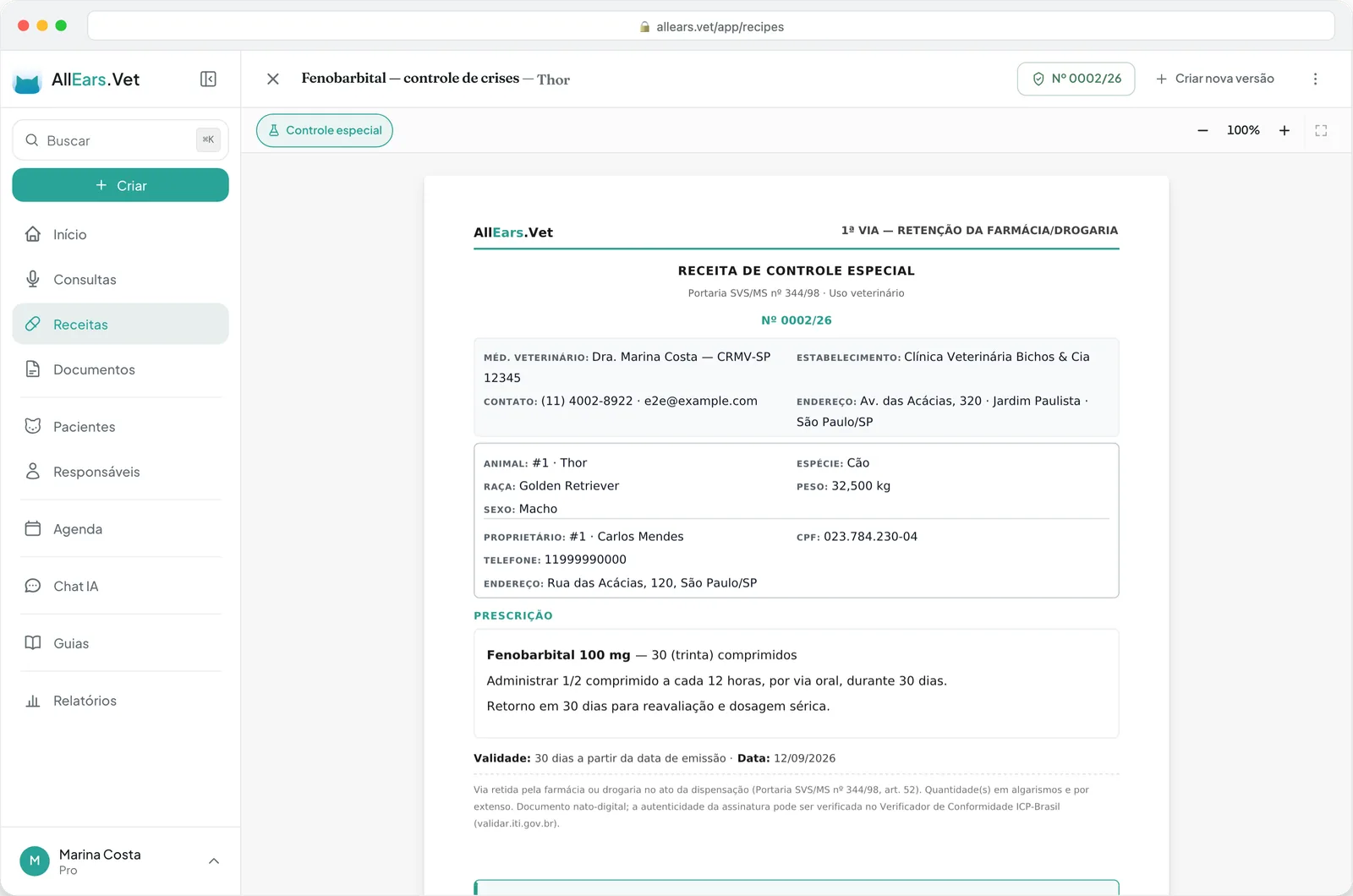
A signed special-control prescription: the per-type number, the qualified signature stamp and the verification QR in the footer.
Gradual rollout: official SNCR numbering for special-control prescriptions. The integration is built and will be enabled account by account as ANVISA opens the production environment.
Waiting on ANVISA: prescription notifications A (yellow) and B (blue). The app is already integrated with the SNCR and will issue them electronically as soon as ANVISA opens the system to platforms. Until then, the physical pad from the health surveillance authority remains valid.
From zero to your first signed prescription
- Register your CRMV, title and clinic details — they become the header and letterhead of the prescription.
- Buy an A1 e-CPF from a Certificate Authority accredited by ITI and download the file.
- Upload the certificate to the app once; after that, every signature asks for the password alone.
- If you prescribe controlled compounded formulas, enter your MAPA number in your profile.
- Make sure the patient weight and the guardian's CPF and address are on file — controlled types require them, and the app asks on the spot when missing.
- Create the prescription, choose the prescription type, tap Sign and send the PDF to the guardian. The QR lets the pharmacy verify it and record the dispensation.
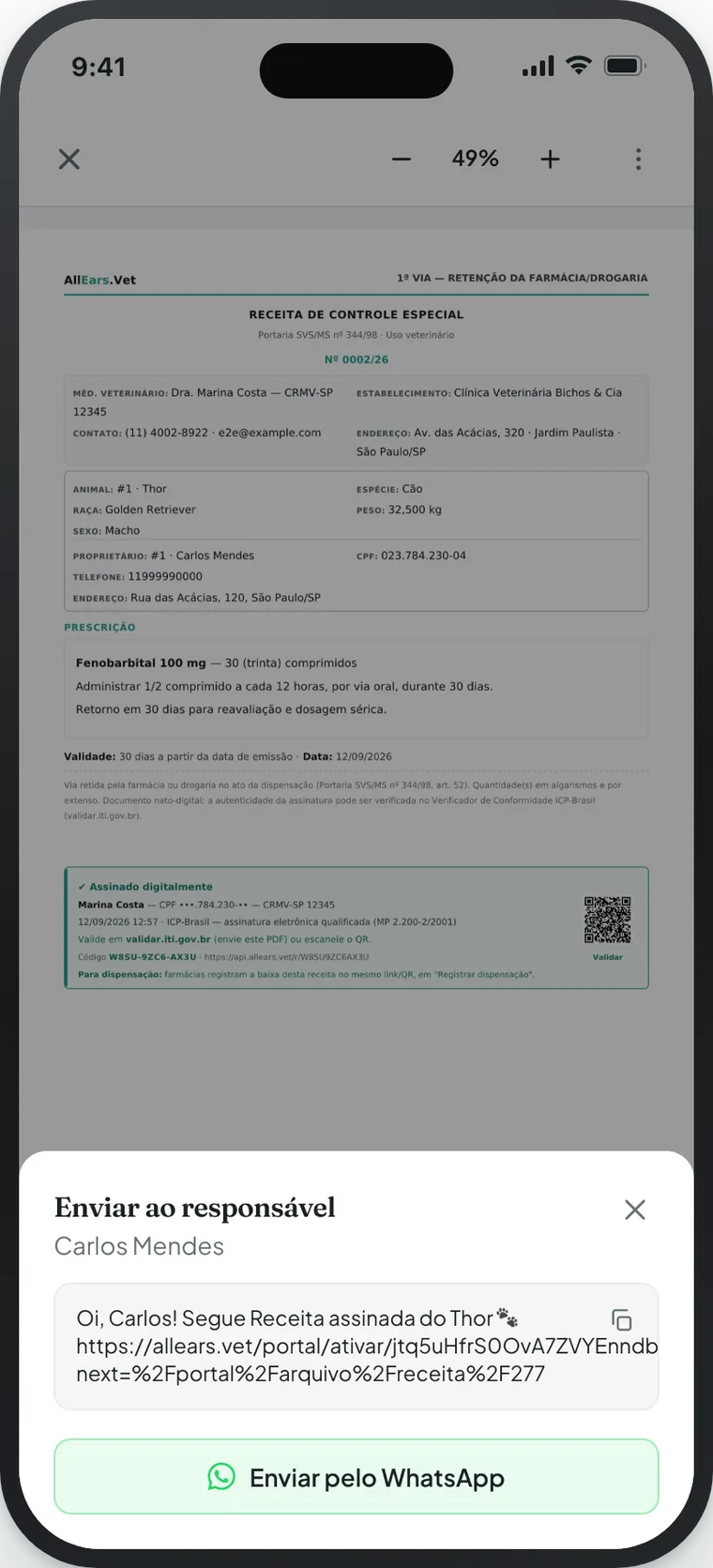
Sending goes out ready over WhatsApp, with the link to the file in the guardian portal.
The detailed version, with a checklist you tick as you go, is in the Help Center: How to issue a digitally signed veterinary prescription. For the rules of the white form itself, see also Special Control Prescription in veterinary medicine: when to use it, requirements, and how to issue it correctly.
In short
30 September 2026 is ANVISA's deadline, not yours. Paper remains valid, simple prescriptions can already be electronic, and electronic controlled prescriptions arrive together with the SNCR. What does not change is the foundation of it all: the qualified ICP-Brasil signature. Those who set it up now get ahead — and stop printing, stamping and photographing prescriptions for good.

