Articles on technology, management and best practices for veterinarians who want to go further.
Not every poisoning has an antidote — and the wrong antidote gets in the way. A practical guide to toxicant–antidote pairs in small animals, with reference doses, the most common ER pitfalls, and what to do when no reversal agent exists.
Canine atopic dermatitis is one of the most common skin diseases in small animal practice. Learn how to recognize clinical signs, work through the differential diagnosis and build a long-term multimodal management plan.
A practical clinical guide to diabetes mellitus in dogs and cats: differences between species, diagnosis, insulin selection, glucose curves, fructosamine and the owner's role in home management.
Canine otitis is rarely "just a dirty ear". When it recurs, there is almost always an untreated primary cause and ignored perpetuating factors. See how the PPSP model organizes clinical reasoning and reduces relapses.
Acute pancreatitis is one of the most common abdominal emergencies in canine practice. We review risk factors, clinical signs, the role of cPLI/Spec cPL and ultrasound, and the pillars of supportive care: fluid therapy, analgesia, nausea control and early nutrition.
FLUTD is one of the most common reasons cats are presented to the clinic. A practical guide to idiopathic cystitis, urolithiasis, the male urethral obstruction emergency and multimodal management with environmental enrichment (MEMO).
The canine tick fever complex — ehrlichiosis caused by Ehrlichia canis and babesiosis caused by Babesia spp. — remains among the most frequent challenges in small-animal clinical practice in Brazil. A practical guide to phases, clinical signs, diagnosis, treatment and prevention.
A clinical, practical guide to canine visceral leishmaniasis: vector, clinical signs, diagnosis, LeishVet staging, treatment in Brazil and prevention. A responsible look at an endemic zoonosis.
Compounding solves problems the pharmaceutical industry doesn't cover: fine dose adjustment by weight, palatability and tailor-made dosage forms. See the real indications, the mandatory elements of a correct compounded prescription, the most common mistakes, and how to communicate with the compounding pharmacy to ensure safety.
A murmur heard during routine exam, a persistent cough, and suspected heart failure: a practical guide to help the clinician decide what is incidental, what deserves staging, and when to investigate canine heart disease in depth.
The two-copy Special Control Prescription is required for several medicines under special control. Understand when it is needed, the mandatory data, validity, copy retention, and the role of digital prescribing with an ICP-Brasil signature.
The LGPD applies to veterinary clinics too. Here is a practical guide to the data you collect, the legal bases that apply, owners' rights, and best practices to protect medical records and personal information — including when you use digital and AI tools.
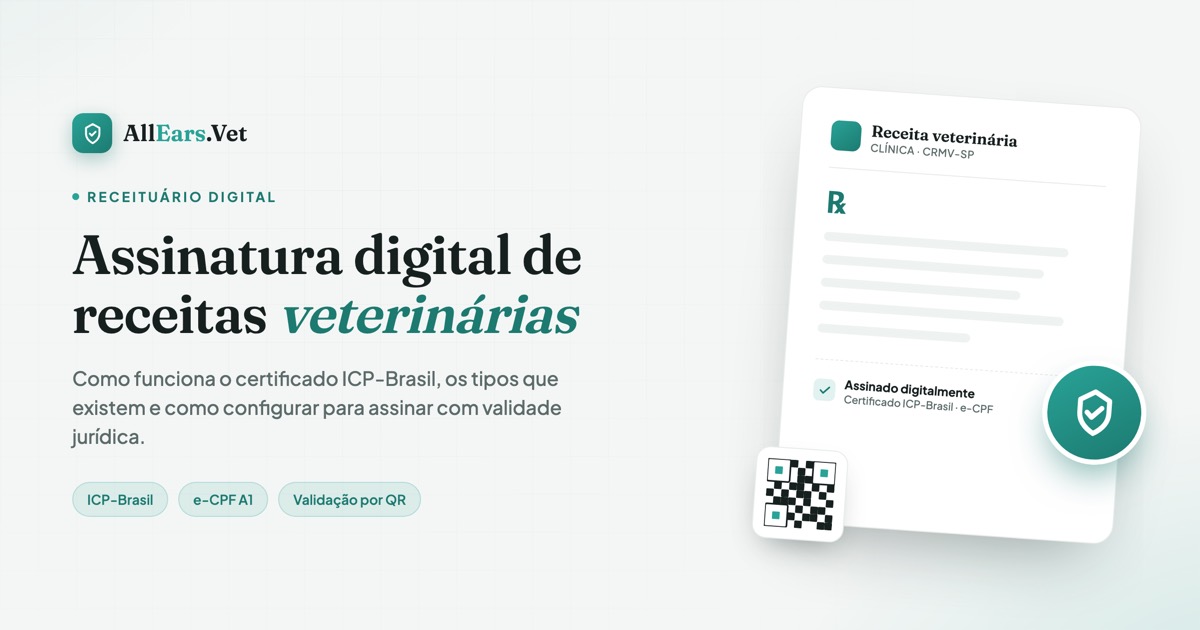
ICP-Brasil, e-CPF, A1 or A3? See how digital signatures for veterinary prescriptions work, where to get a trustworthy certificate, and how to set it all up in AllEars.Vet to sign in seconds.
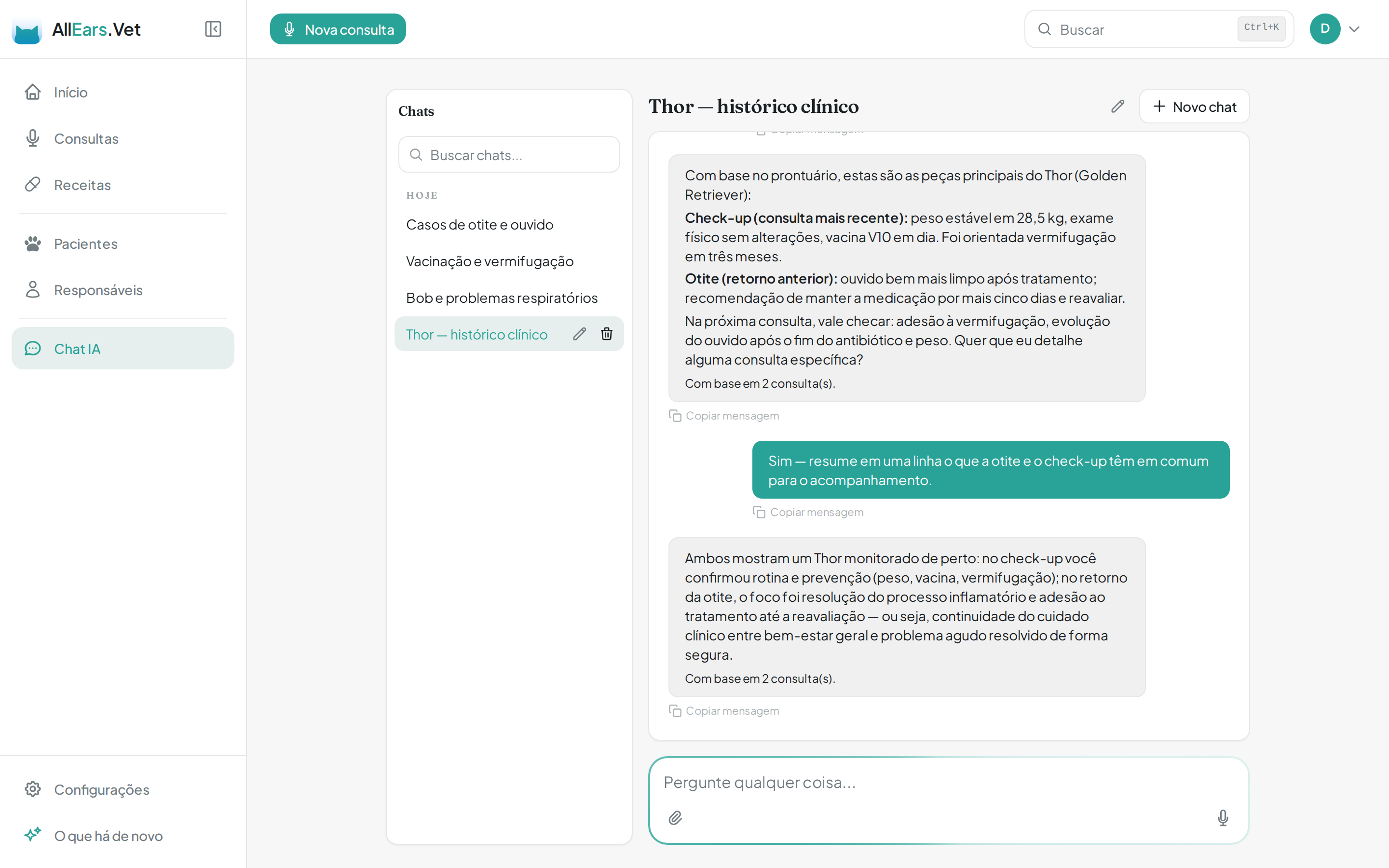
Two AI features in AllEars.Vet change how you work with your clinic's data: the MCP server, which connects your own Claude or ChatGPT to your patients and records, and the Mima chat, which understands which patient or consultation you're asking about before it answers.
Choosing veterinary clinic management software changed in 2026. See the essential features, how AI automates medical records and consultations, and a practical checklist to decide with confidence.